Press Release · China Review Studio
Poetry Connects Us Across Distances
Distributed by AI Book Site · Originally issued via PR Newswire
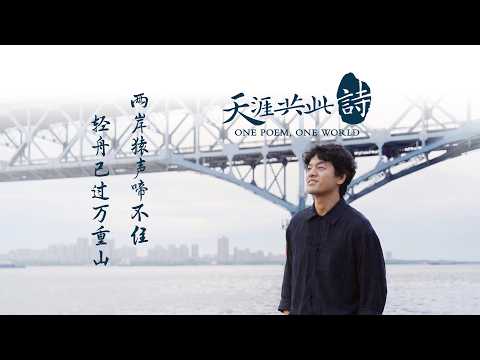
BEIJING, Nov. 26, 2026 — Separated by mountains and seas and divided by languages, we find shared emotions and philosophies embedded in classical Chinese poetry. One Poem, One World is a short film series of 20 episodes jointly produced by China Review Studio, China International Communications Center, Henan Radio and Television Station, Shandong Radio and Television Station and Chengdu Radio and Television Station.

It invites international guests to travel across China and gently unfolds the Chinese way of life, values, and spiritual pursuits. Through their outsider perspective and real-life experiences, they connect with ancient poems and build a bridge for empathy between civilizations. Several episodes have been released. Here we share four of them — four journeys, four states of mind.
Leaving the White Emperor Town at Dawn is an immortal masterpiece composed by Li Bai when he headed east after receiving an amnesty. On the surging Yangtze River, a light boat glides past rolling mountains, conveying the ease and relief after breaking free from hardship. Japanese director Takeuchi Ryo has travelled along the Yangtze twice and created two documentaries about the river. While documenting the changes along its banks, he witnesses ordinary people including Tsum break free from constraints and gradually forge their own paths. This helps him grasp the relief captured in this famous poem. The "ten thousand mountains" refer not only to the continuous peaks lining the Yangtze, but also to the unavoidable hardships in life. Press onward, and a broader vista awaits after the journey.
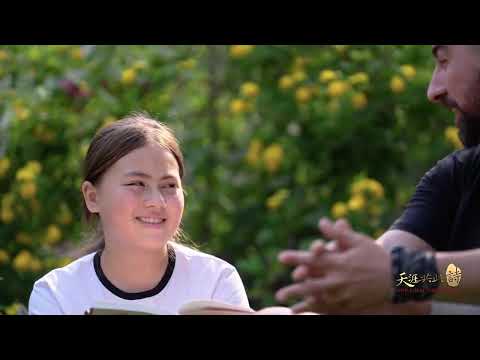
The Western Mountain Village is a celebrated poem written by Lu You during his rural travels. Wandering amid layered hills and winding streams, one may think the road comes to an end, yet turning a corner reveals a village nestled among willows and blooming flowers. It carries the profound truth that hope can emerge even in difficult times. Abdurrahman, who comes from Istanbul, once ran foreign trade business in Yiwu. When his business slowed and his future felt uncertain, he settled in a village in Sichuan. He set aside his identity as a businessman, worked the fields and visited local markets alongside villagers, gradually growing from an outsider into part of the community. Lu You's verses are no longer merely words on paper; they mark a turning point he lived through, embodying the strength to keep moving forward amid adversity.
https://youtu.be/_KycO2kUjOM?si=y1U56moeU3Le7QBz
River Scenes on a Spring Evening is a short poem Su Shi wrote for the ancient painting of the same title. With just a few strokes, it depicts early spring in Jiangnan: peach blossoms bloom, river waters warm, and ducks are the first to sense spring's arrival, brimming with the vitality of reviving nature. American photographer Dan Sandoval has lived in China for more than twenty years and is far more than a casual visitor. He travelled to Hangzhou, waiting by the lake at dawn to soak in the breath of early spring amid local daily life. He captures the river, peach blossoms and vibrant life with his camera. Su Shi captured the signs of spring through an old painting; through on-site observation and experience, Dan understands the core of the poem — genuine perception always comes from being there in person.
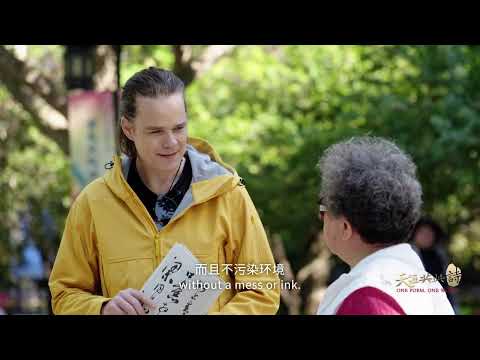
The Book is a classic philosophical poem by Zhu Xi. A pond stays crystal clear because fresh running water flows into it nonstop. This serves as a metaphor: we must keep absorbing new knowledge and stay open-minded so our thinking will not grow stagnant. British scholar Daniel Newham has engaged with Chinese culture for nearly thirty years. For a long time, he explored Eastern ideas mainly through translations. To gain deeper understanding, he stepped out of libraries, visited artisans and practiced calligraphy. He uncovered the true meaning of the verse within living folk traditions. He comes to understand that to keep a lucid mind, one must keep learning, stay open, and engage continuously with real life and diverse civilizations.
https://youtu.be/F920-bfDFe4?si=P8lYt479_kEWmVcL
These cross-cultural encounters with poetry involve no rigid interpretation or imposed narratives. Visitors from different countries resonate with age-old verses through their own life stories. Poetry transcends language. Though far apart, we meet across distance, bound by shared poetic sentiment.
SOURCE China Review Studio